Background

The Trinity East Portal project on Pearse Street involved the transformation of a historic warehouse into a state-of-the-art research and innovation facility for Trinity College Dublin.

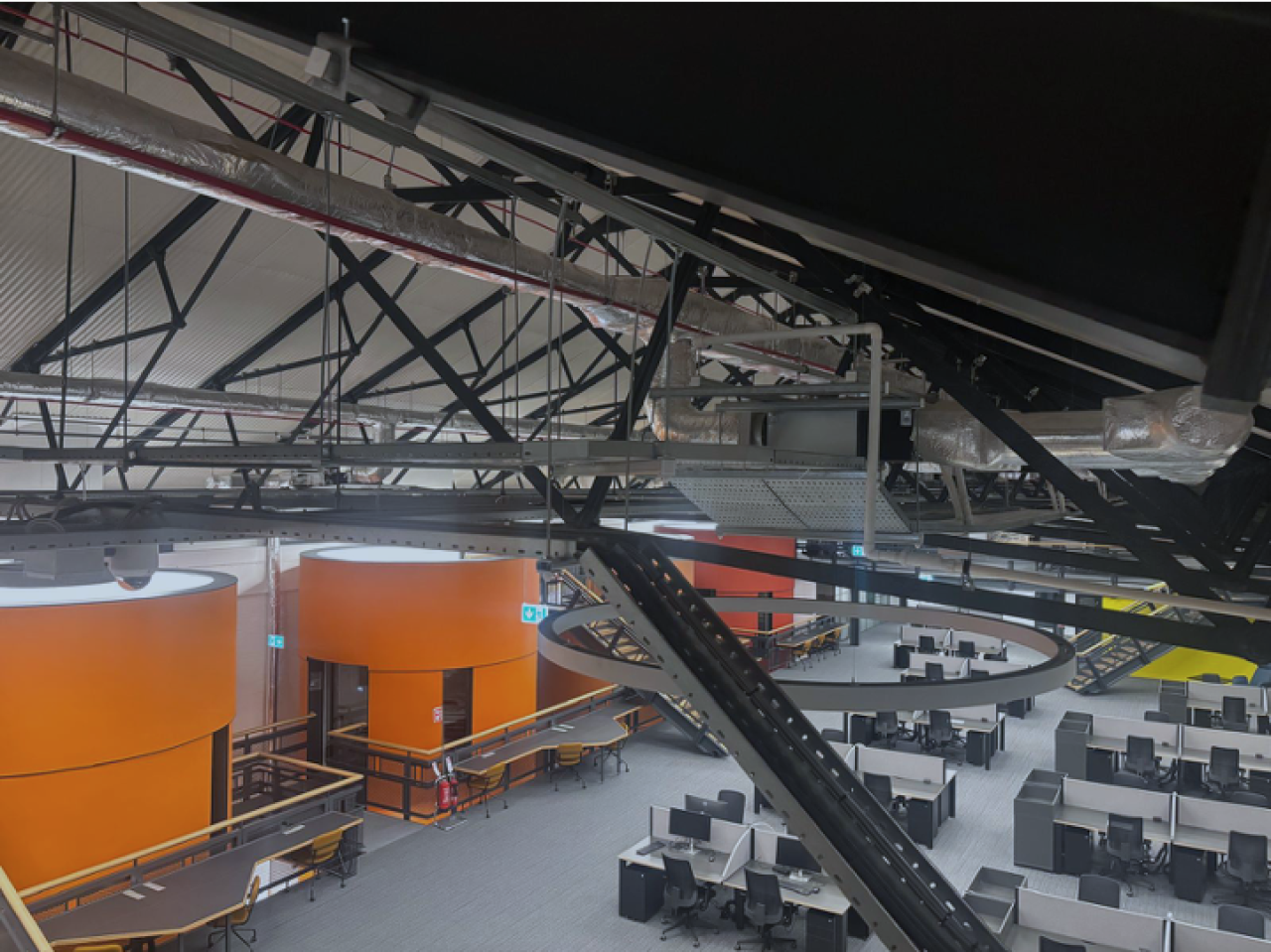
The redevelopment combined the sensitive refurbishment of the existing structure with carefully integrated new-build elements. The original warehouse roof structure, exposed steelwork and industrial character were retained, creating a distinctive environment in which modern building services would form part of the architectural expression.

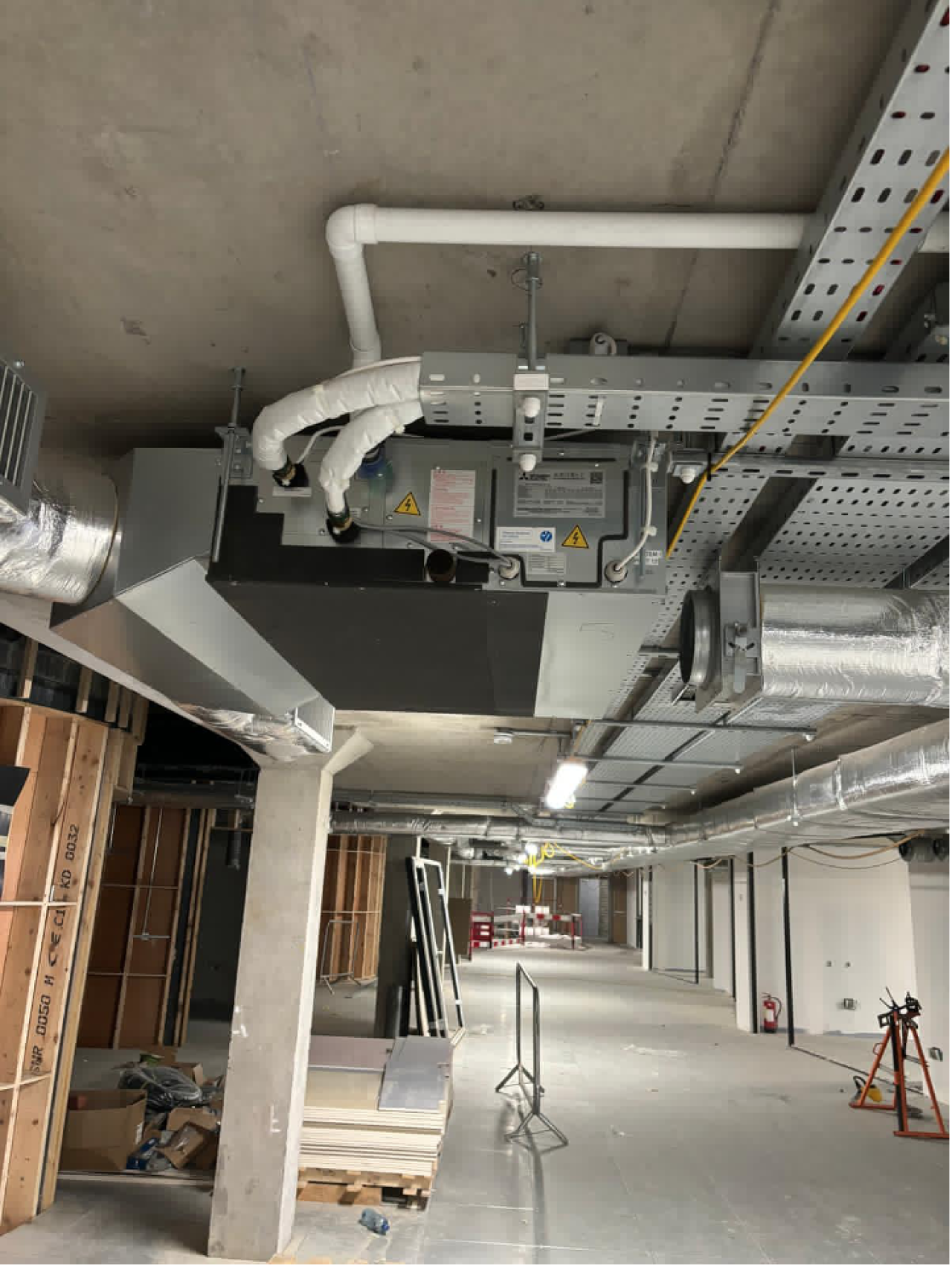
As part of the project, a Mitsubishi Electric Hybrid VRF (HVRF) system was installed to provide efficient and flexible heating and cooling throughout the facility. The system comprised of three HVRF outdoor units, three Hybrid Branch Controllers (HBCs), approximately one kilometer of water pipework and 32 Mitsubishi Electric PEFY-WP ducted indoor units.

Completed in February 2025, the project demonstrates how modern HVAC technology can be successfully incorporated into a complex heritage refurbishment while respecting the character and fabric of the original building.
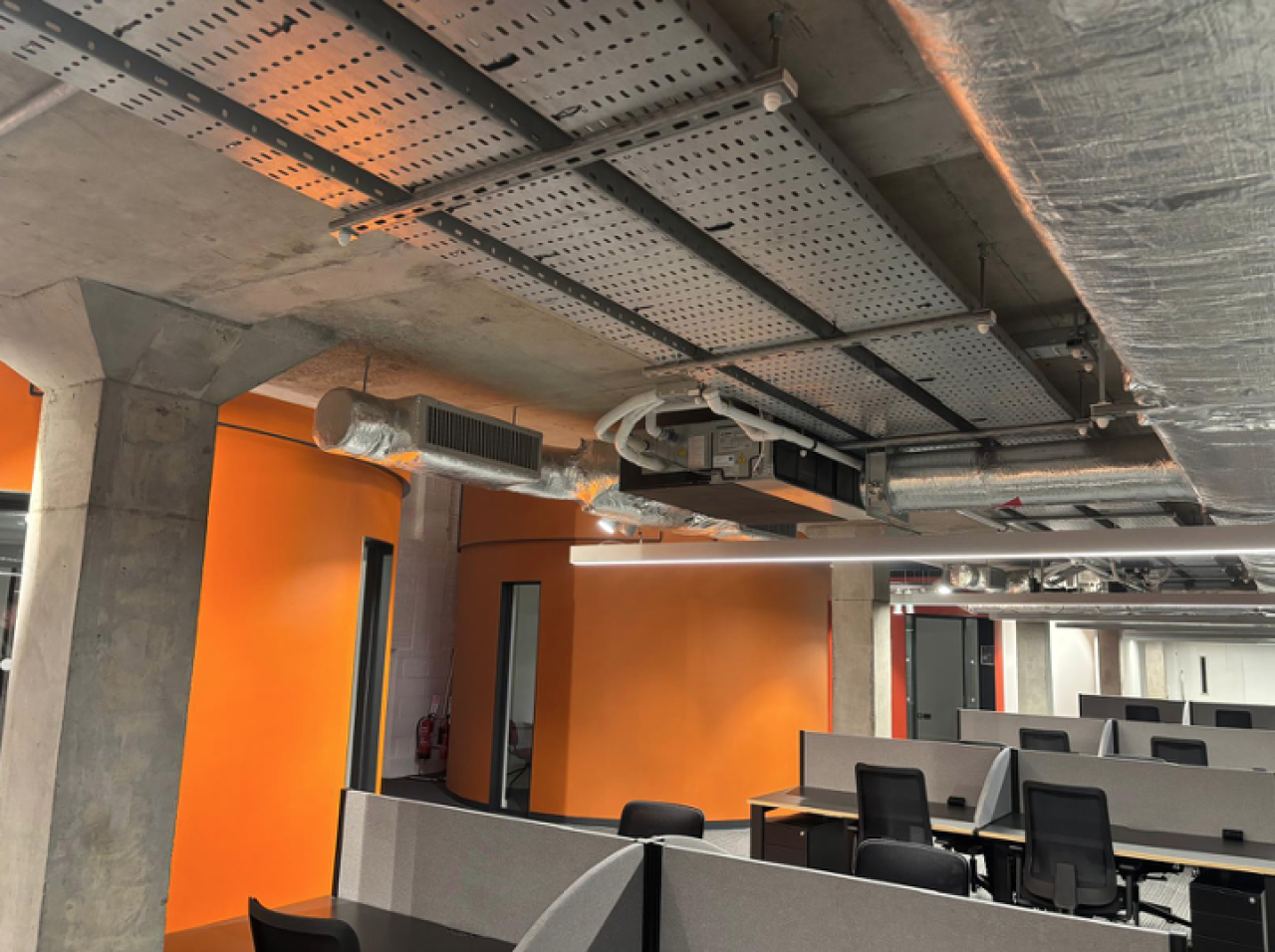
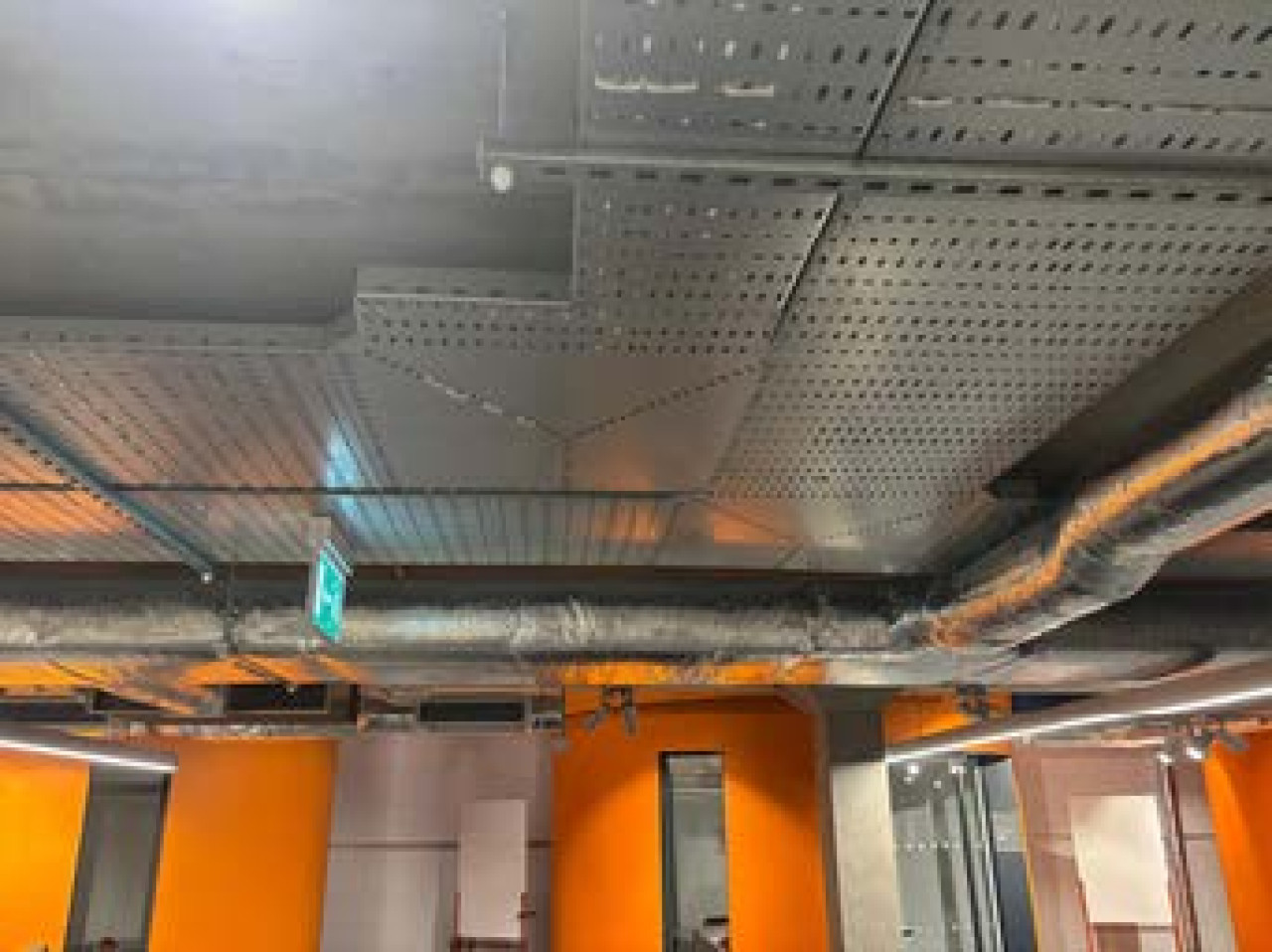
Trinity Portal East

Challenge

One of the defining challenges was the exposed nature of the installation. With no suspended ceilings to conceal the equipment, every indoor unit, pipe route, valve arrangement, bracket and fixing would remain permanently visible. 

As the mechanical services became an integral part of the building's industrial aesthetic, this placed an exceptional emphasis on the quality and presentation of the HVAC installation. Every element needed to meet demanding technical requirements while also complementing the building's industrial aesthetic.

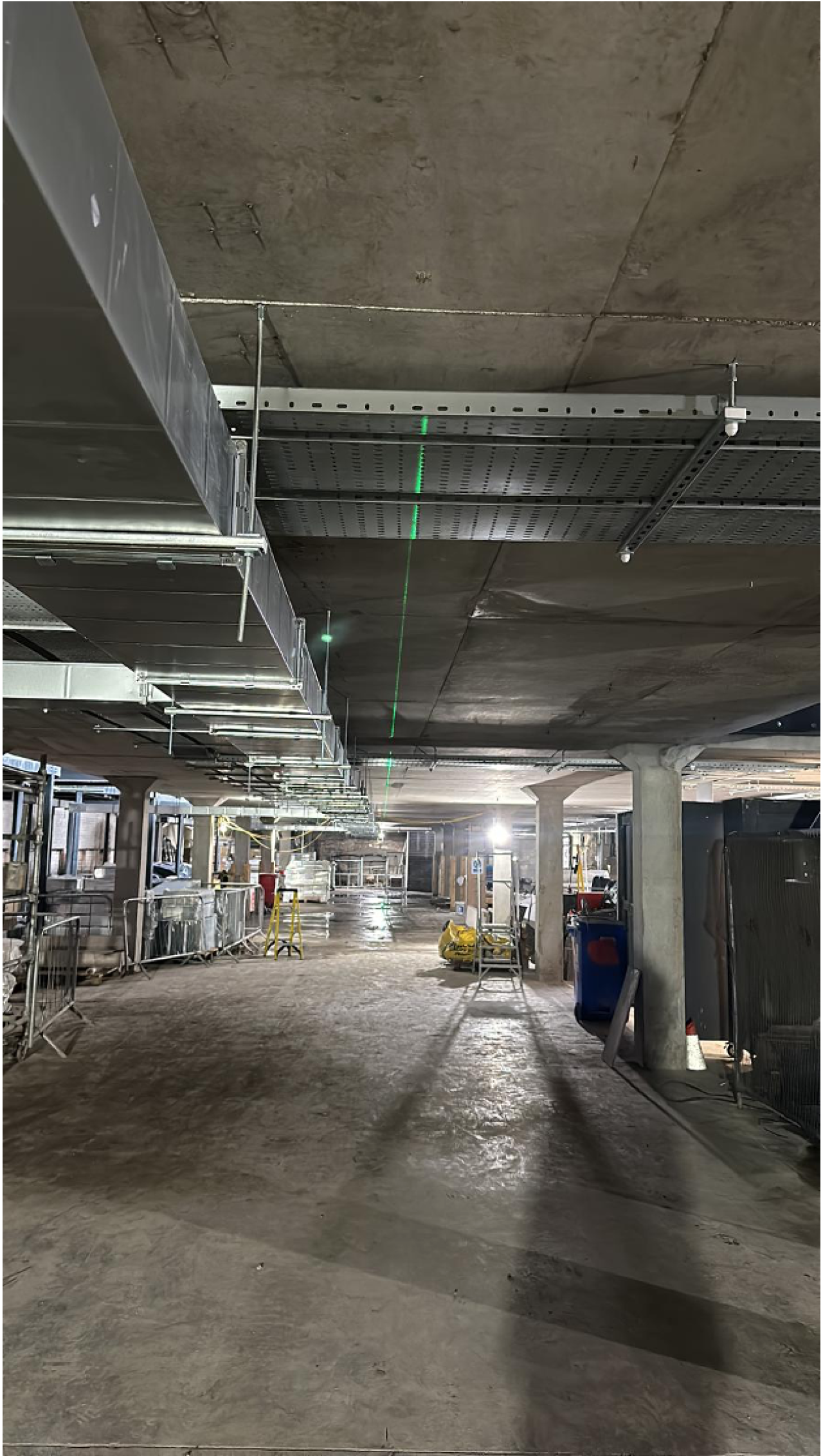
The historic warehouse structure created further complexity. Existing steel girders and roof trusses, varying ceiling heights, different floor levels and restricted basement areas all had to be navigated when determining service routes. Safe access to high-level areas required the use of Mobile Elevating Work Platforms (MEWPs), while installation within confined basement areas required carefully planned sequencing.

The project was also delivered in a busy multi-trade environment alongside electrical, plumbing and construction contractors. Close coordination was therefore essential to minimise clashes, maintain the programme and achieve a consistent finish across the development.

Trinity East Portal 2

Solution

Mitsubishi Electric's HVRF technology provided a flexible solution suited to the technical, environmental and architectural requirements of the development.

Unlike a conventional VRF system, HVRF uses water rather than refrigerant as the heat transfer medium throughout occupied spaces. This significantly reduces the volume of refrigerant circulating within the building while maintaining the flexibility and comfort associated with VRF technology.

Eagle Air Conditioning utilised comprehensive 3D coordination modelling to plan the installation around the retained structure and other building services. By identifying potential clashes before work commenced, the team was able to develop carefully considered service routes, improve installation efficiency and achieve the high standard of finish required for an exposed installation.

As structural conditions varied throughout the building, bespoke support brackets and fixing arrangements were designed and fabricated for individual locations. These allowed the pipework and equipment to follow the geometry of the existing structure while maintaining both engineering standards and a clean, consistent appearance. Gravity drainage was also used for condensate wherever practical to support long-term reliability and reduce maintenance requirements.

A comprehensive Mitsubishi Electric controls strategy was incorporated, including the AE-200 Central Controller, local Touch Controllers, MELCloud connectivity and full Building Management System integration. Together, these provide centralised monitoring, scheduling, fault management and system optimisation.

Following the installation, the complete system underwent pressure testing, flushing, vacuum testing and independent commissioning to verify its integrity and performance prior to handover.

Trinity Portal East

Results

The completed installation provides Trinity College Dublin with a high-performance, flexible and future-ready heating and cooling solution designed around the varying demands of a modern research and innovation environment.

HVRF heat recovery enables simultaneous heating and cooling, allowing energy that would otherwise be rejected to be redistributed to areas requiring heat. Combined with advanced controls and BMS integration, this supports efficient building operation while giving the facilities management team comprehensive oversight of the system's performance.

The solution also contributes to the wider sustainability ambitions of the redevelopment. Using water as the heat transfer medium within occupied spaces reduces refrigerant volumes and associated Global Warming Potential exposure, while the adaptive reuse of the existing warehouse helps extend the life of the building and reduce the embodied carbon associated with complete redevelopment.

Although post-occupancy performance data is still being gathered, the system provides a strong foundation for long-term energy efficiency, reduced refrigerant impact and effective building management.

Importantly, the quality of the exposed installation became a successful architectural feature in its own right. During the final demonstration and handover, the client's lead project engineer praised the workmanship and aesthetic finish, noting that the quality of the installation was unlike anything they had previously seen.

Trinity Portal East

Conclusion

The Trinity East Portal project demonstrates how thoughtful engineering, advanced HVAC technology and meticulous coordination can bring a historic structure into modern use without compromising its architectural identity.

By combining Mitsubishi Electric HVRF technology with detailed 3D coordination, bespoke support solutions and intelligent controls, the project team successfully overcame the challenges of installing an extensive HVAC system within a complex and fully exposed heritage environment.

The result is an installation in which performance and presentation work together. Rather than simply accommodating the building's industrial character, the mechanical services have become part of it, delivering the comfort, flexibility and operational control required of a modern research facility while supporting Trinity College Dublin's long-term sustainability objectives.

Ultimately, the project provides a strong example of how heritage preservation and modern, lower-carbon building services can be successfully integrated to create a facility that is both technically accomplished and architecturally distinctive.

Trinity Portal East

Harmony Award Winners:

Eagle Air Conditioning won the 2026 Excellence in HVRF System Installation Award at the Mitsubishi Electric Harmony Awards for their work on this project.

Winner les1