The Background

Bank of Ireland is one of Ireland’s most established financial institutions, with a strong presence across the country and a clear commitment to sustainability. At the heart of this commitment lies its Cabinteely data centre; a critical facility operating 24/7 to support the bank’s core services. Originally built in the 1970s and renovated in the 1980s, the building has served the bank for decades, but evolving environmental goals demanded a major transformation. 


As part of Bank of Ireland’s 2030 carbon reduction strategy, the engineering team set out to reduce reliance on fossil fuels and move toward full electrification. This ambitious project focused on replacing traditional gas boilers with a high-efficiency heat pump system, ensuring the site could maintain uninterrupted operations while achieving significant sustainability goals. 
Bank of Ireland Opening

This case study showcases Bank of Ireland’s dedication to decarbonisation and how Mitsubishi Electric’s advanced CAHV heat pump technology, combined with JV Tierney’s design expertise and Crossflow’s installation excellence, delivered a seamless retrofit solution for one of Ireland’s most important financial hubs. 

Bank of Ireland CAHV 10

The Challenge

Transforming a 1970s data centre into a modern, energy-efficient facility required balancing technical innovation with operational continuity. Bank of Ireland’s vision was clear: decarbonise the site, eliminate reliance on fossil fuels and future-proof the building, all without disrupting its daily operations. Robbie Norman, Property Engineering Manager at Bank of Ireland, tells us that "this project was kicking off to remove our reliance on gas and then reduce our impact on the environment".  


The heating solution had to overcome four major hurdles. First, retrofit complexity: integrating advanced heat pump technology into an older infrastructure meant designing a system that could replicate boiler performance, while meeting sustainability goals. 

Bank of Ireland Logo

Second, live site constraints: the data centre could not afford downtime. Installation had to be executed in a way that ensured zero impact on staff or services. 


Third, sustainability and compliance: the project was driven by ambitious targets, removing as much carbon as possible annually, achieving full electrification and adopting low-GWP refrigerants to comply with upcoming F-Gas regulations. 

Bank of Ireland Mr Slim 1

“Finally, technical integration: the solution needed seamless compatibility with existing heating systems and controls. A modular, cascade-controlled design was key in handling variable loads and guarantee redundancy, while advanced features like weather compensation add further flexibility and sophistication” 


Meeting all of these requirements in a live, mission-critical environment defined the central challenges of this project. 

Bank of Ireland CAHV 8

The Solution

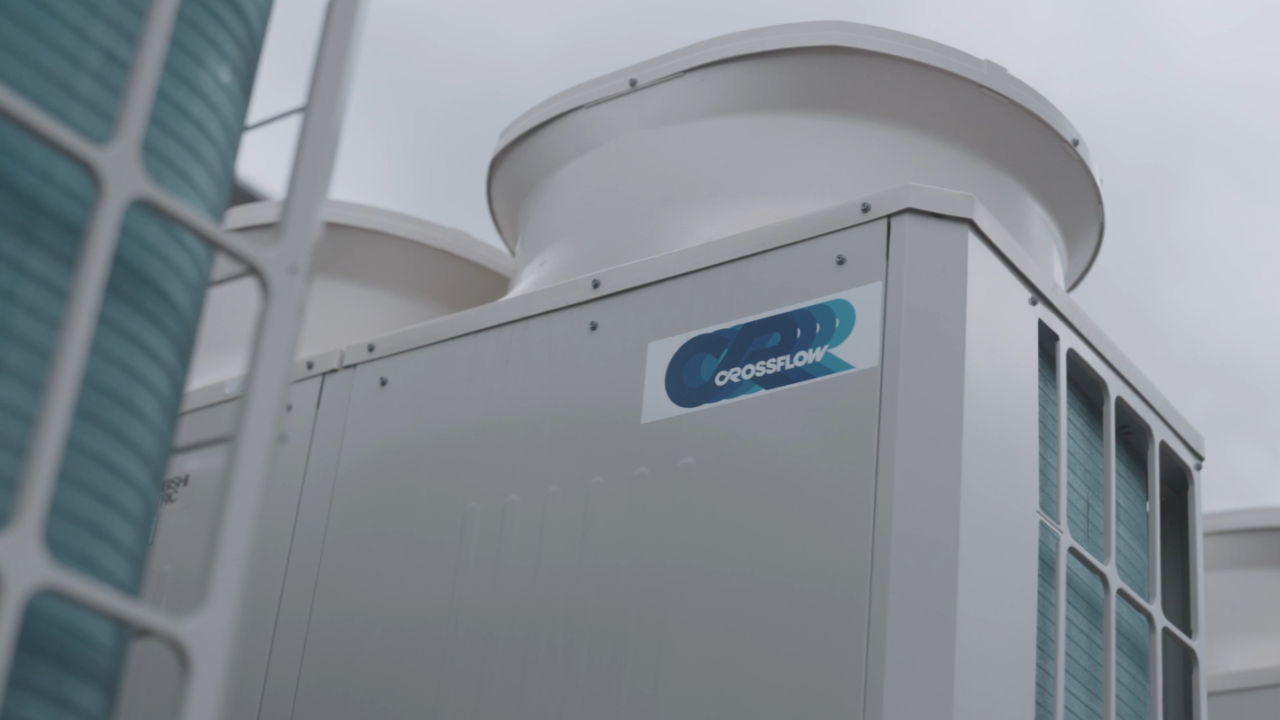
The success of this project began with strong partnerships. Crossflow, a trusted HVAC specialist with over 50 years of experience and a long-standing relationship with Bank of Ireland, played a central role in delivering a seamless installation. Their status as a Mitsubishi Electric Diamond Quality Partner (DQP) ensured expert commissioning, extended warranty support and zero downtime; a critical requirement for a live data centre operating 24/7. 


Equally important was the involvement of JV Tierney & Co Consulting Engineers. Aaron O’Mahony, Project Engineer for JV Tierney describes the firm as “passionate about sustainability in buildings”. They were the ones who specified Mitsubishi Electric as the preferred solution after a rigorous evaluation process. “The four units that we looked at for this project, we would have had a weighting criteria around energy performance, carbon impact, reliability and cost as well and the Mitsubishi Electric unit came out on top,” explains Robbie.  

Bank of Ireland CAHV 3

Aaron O’Mahony from JV Tierney adds: “I think the fact that it's a retrofit and the fact that we're going into a building that is as old as it is, we need to have something that will do similar to a boiler but obviously new technology and the Mitsubishi Electric CAHVs can do that.” 


Johnny Ryan, Technical Sales for Crossflow Refrigeration, further adds: “Mitsubishi Electric were the perfect option for this project with their reliability and their tech support.” 


It was JV Tierney design expertise that ensured the system would integrate flawlessly with the existing infrastructure while meeting the bank’s ambitious sustainability and compliance goals. It was important “that we have the right heat load to cater for an old building” remarks Aaron. For this reason, JV Tierney worked closely with Crossflow and Mitsubishi Electric throughout the design and construction stages, creating a collaborative environment that guaranteed technical precision and efficiency. 

Bank of Ireland CAHV 6

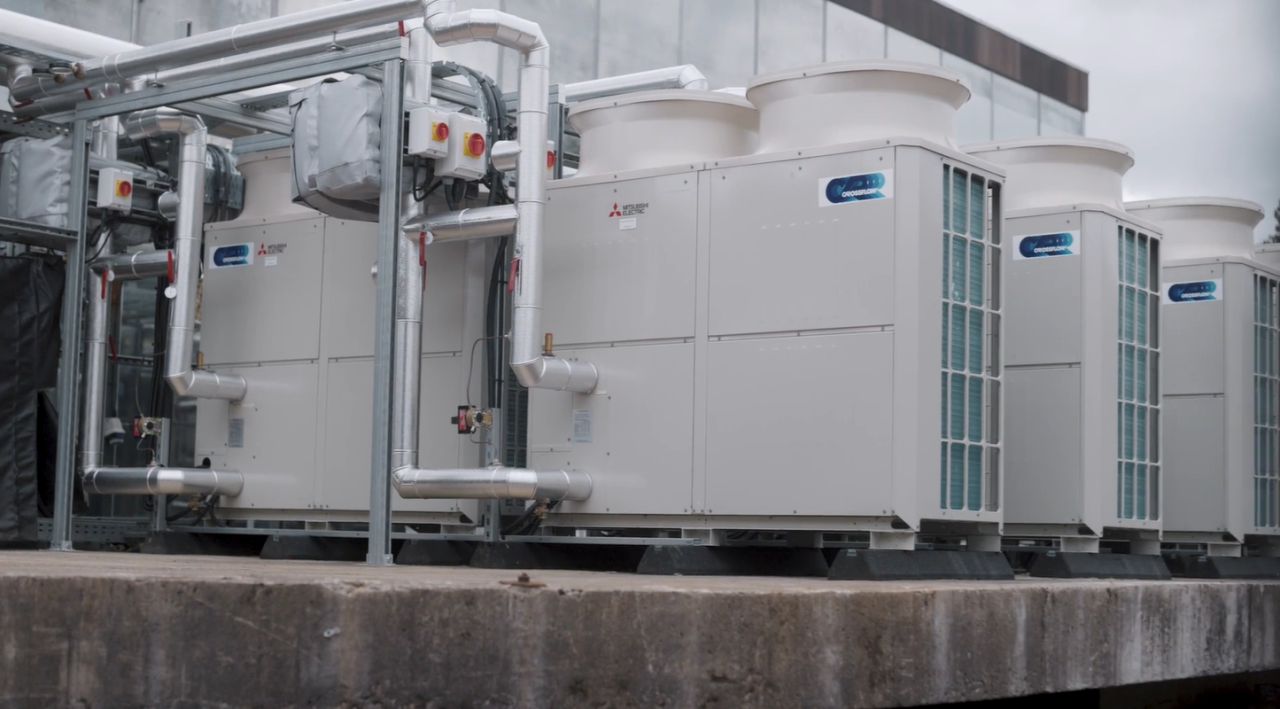
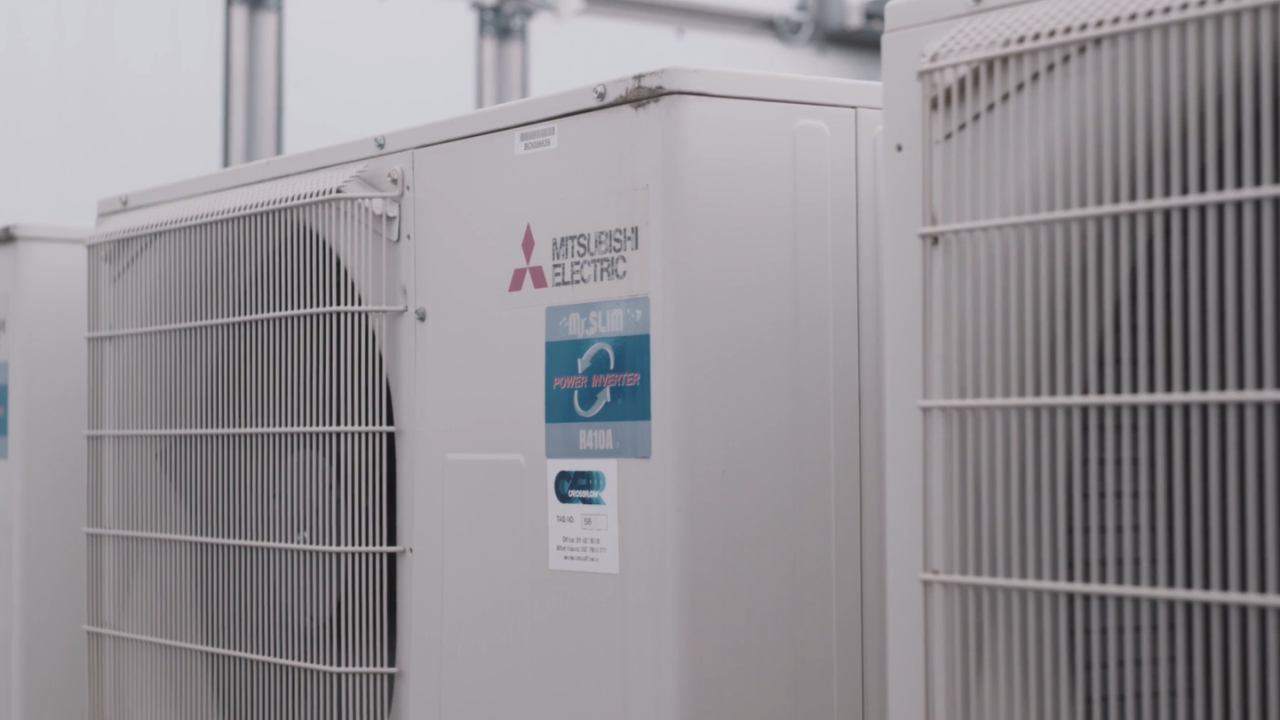
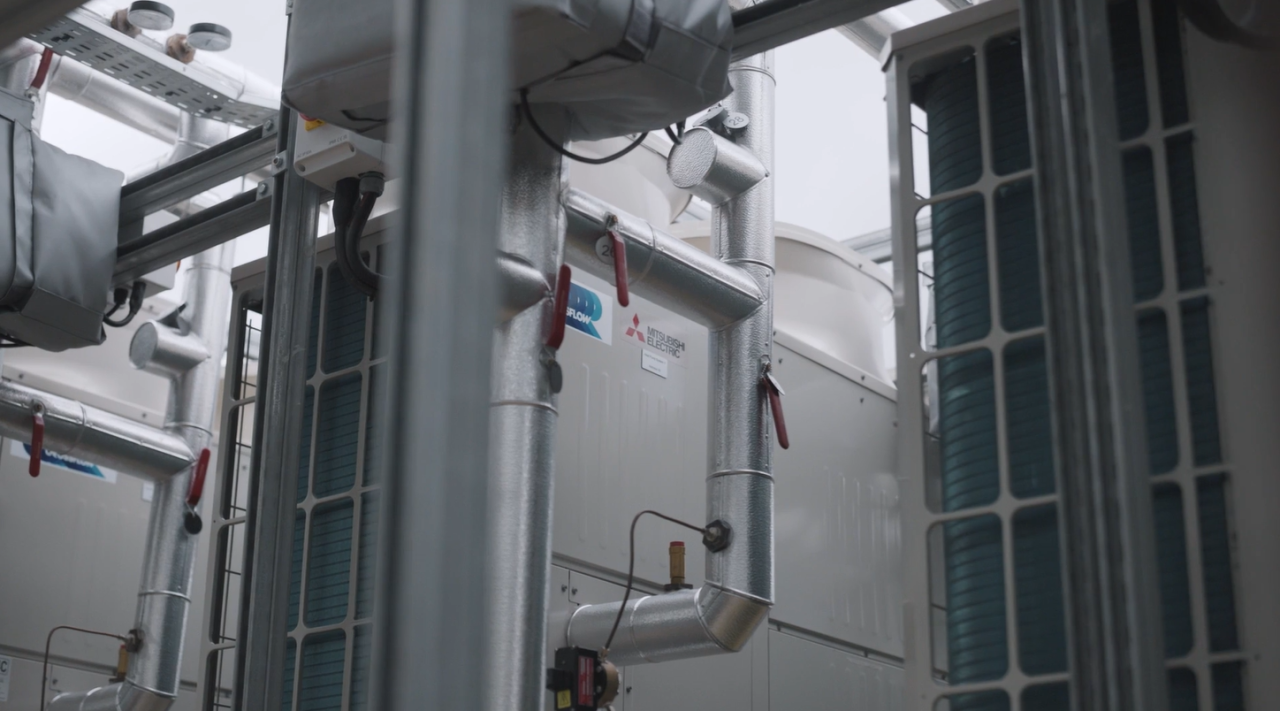
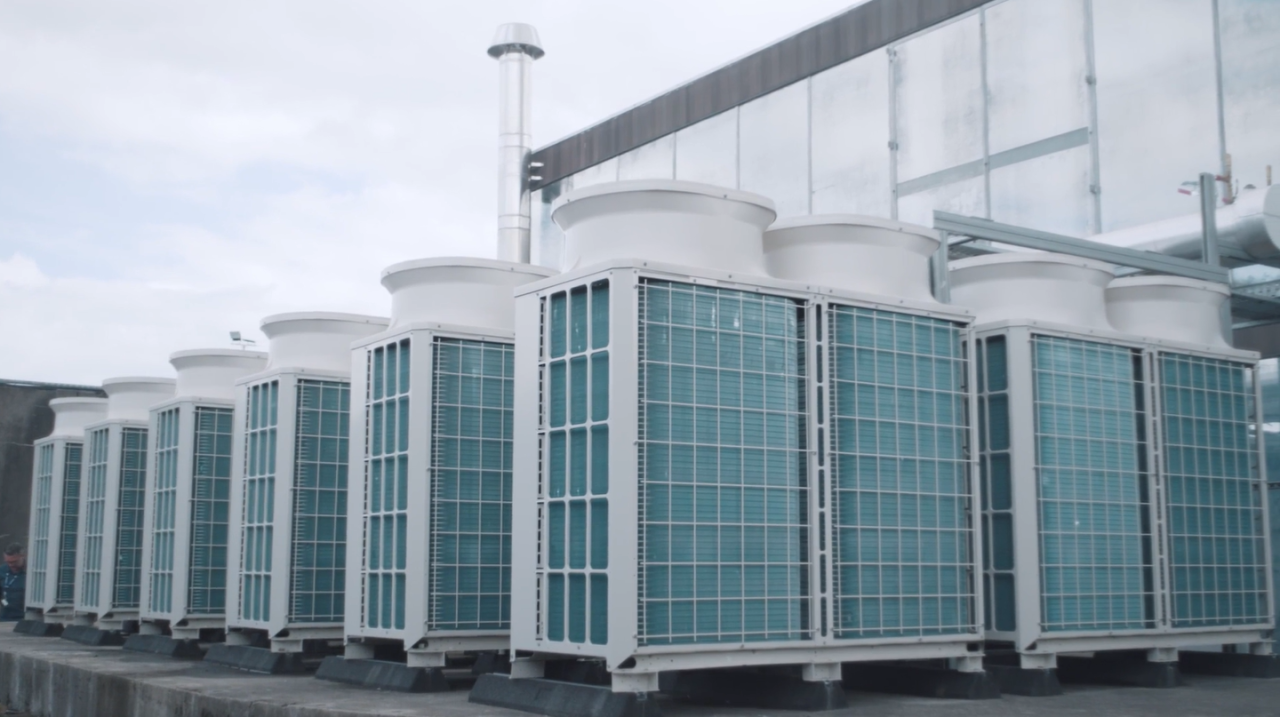
At the heart of the solution was Mitsubishi Electric’s Ecodan CAHV air source heat pump system. “We supplied 12 number Mitsubishi Electric CAHV R450 high temperature heat pumps to Crossflow” mentions Andrew McEvitt, Applied Solutions Manager at Mitsubishi Electric Ireland. This advanced technology was chosen for its ability to deliver high-temperature hot water up to 70°C without boost heaters, making it ideal for replacing traditional boilers. Its modular monobloc design allowed the installation of 12 units in a cascade configuration, providing exceptional flexibility. Built-in cascade and rotation control optimises efficiency and balances run hours, while split refrigerant circuits within each unit offer 50% backup, ensuring reliability even in the unlikely event of a fault. 

Bank of Ireland CAHV 5

With features like precise load modulation in 0.5kW increments and integrated weather compensation, the CAHV system not only met the technical demands of the retrofit but also future-proofed the building against changing government legislations.  


One of the key reasons for selecting the CAHV heat pump was its environmental credentials. As Johnny Ryan explains, “Why we chose that specific heat pump was its low GWP which is in line with all the future F-Gas guidelines thus helping Bank of Ireland reduce their emissions”. 


Together, Mitsubishi Electric, Crossflow and JV Tierney delivered a solution that combines sustainability, reliability and operational excellence for Bank of Ireland. 

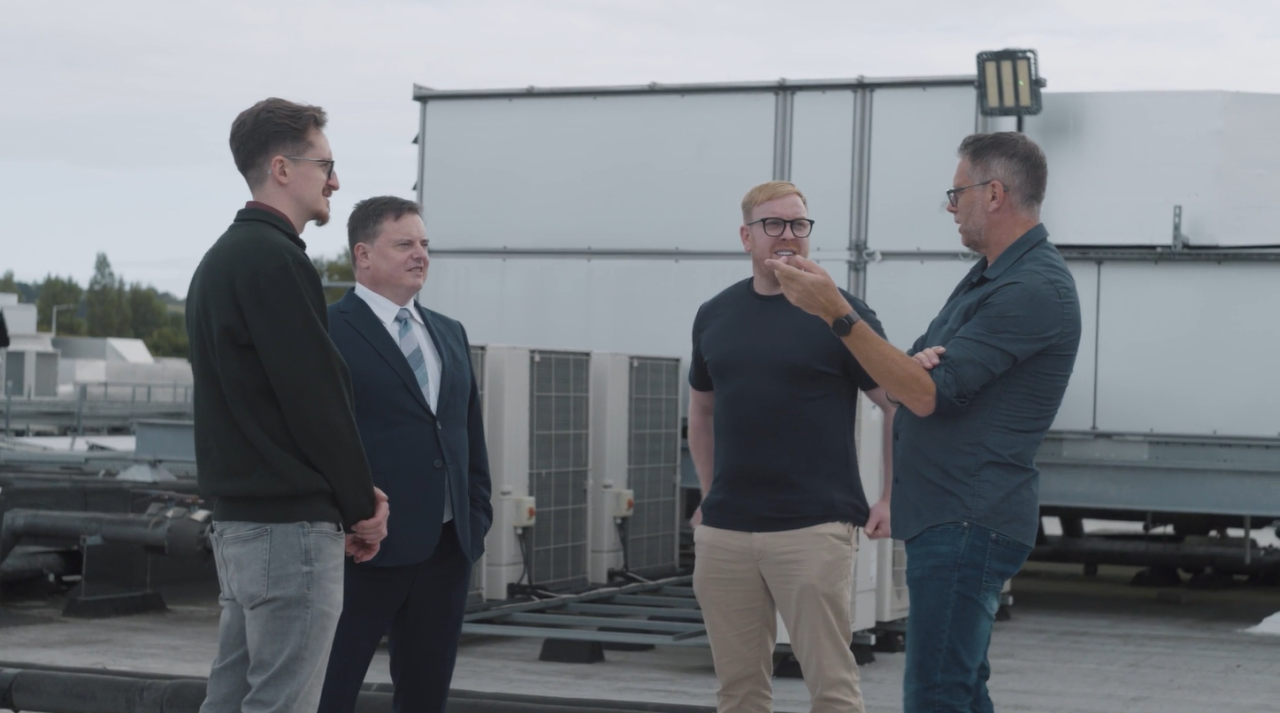
Bank of Ireland Team 1

The Result

The outcome? A fully electrified heating system that has transformed Bank of Ireland’s Cabinteely data centre into a model of sustainability. The retrofit not only eliminates reliance on fossil fuels but "It's going to remove about 120 tonnes of carbon from our overall target out to 2030" boasts Robbie. This marks a significant step toward the bank’s 2030 carbon reduction strategy. 


When recalling this installation, Andrew remembers that “This project was really exciting for us, as it was a full decarbonisation of the bank’s heating system”. The installation of 12 Mitsubishi Electric’s CAHV heat pumps, combined with the expertise of Crossflow and JV Tierney, delivered a solution that will stand the test of time. The installation itself happened over a weekend and was complete without impact or interruption to the building.  

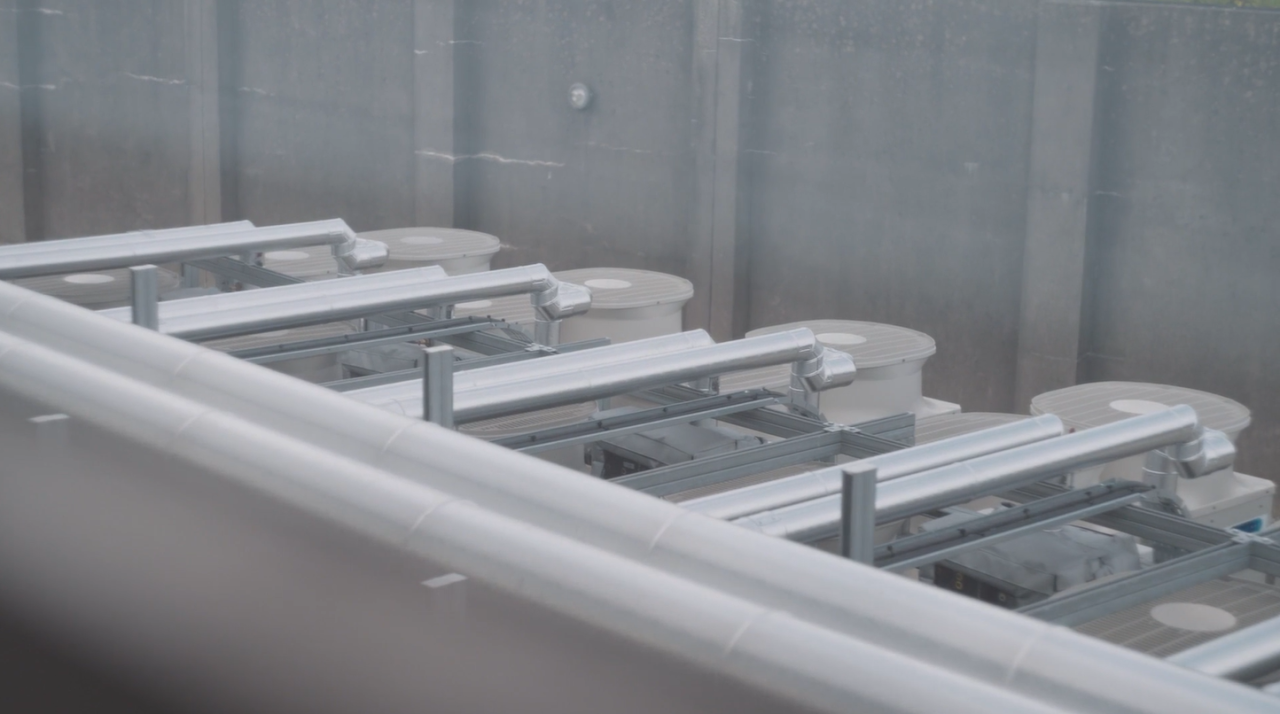
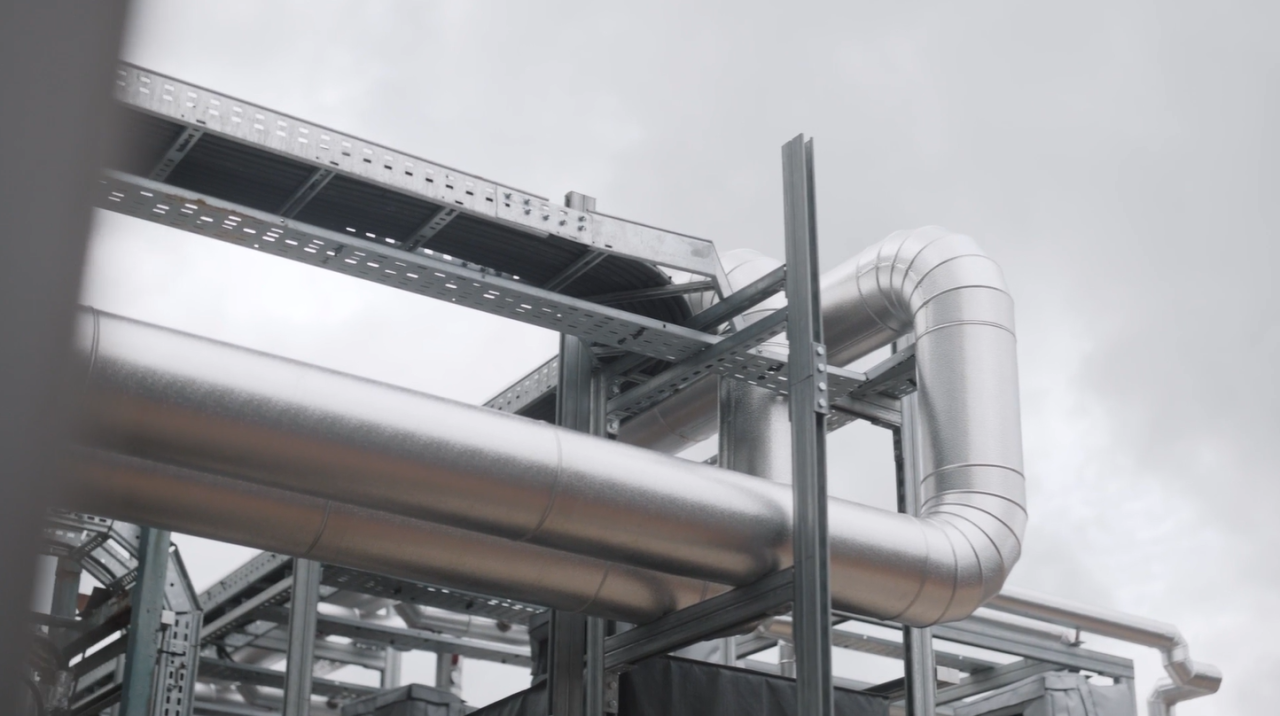
Bank of Ireland Piping

Comfort and reliability were key considerations for this site. With 12 modular units operating seamlessly, the system maintains precise set points without interruption, even during peak demand. Beyond performance, the project future-proofs the building against upcoming F-Gas regulations and aligns perfectly with Bank of Ireland’s sustainability vision. “We're hoping then to replicate this installation across our other admin buildings” Robbie explains. 


This project is more than an upgrade; it’s a statement of intent. By partnering with Mitsubishi Electric, Crossflow, and JV Tierney, Bank of Ireland has delivered a solution that combines innovation, reliability and environmental responsibility. 

Bank of Ireland Team 2

Conclusion

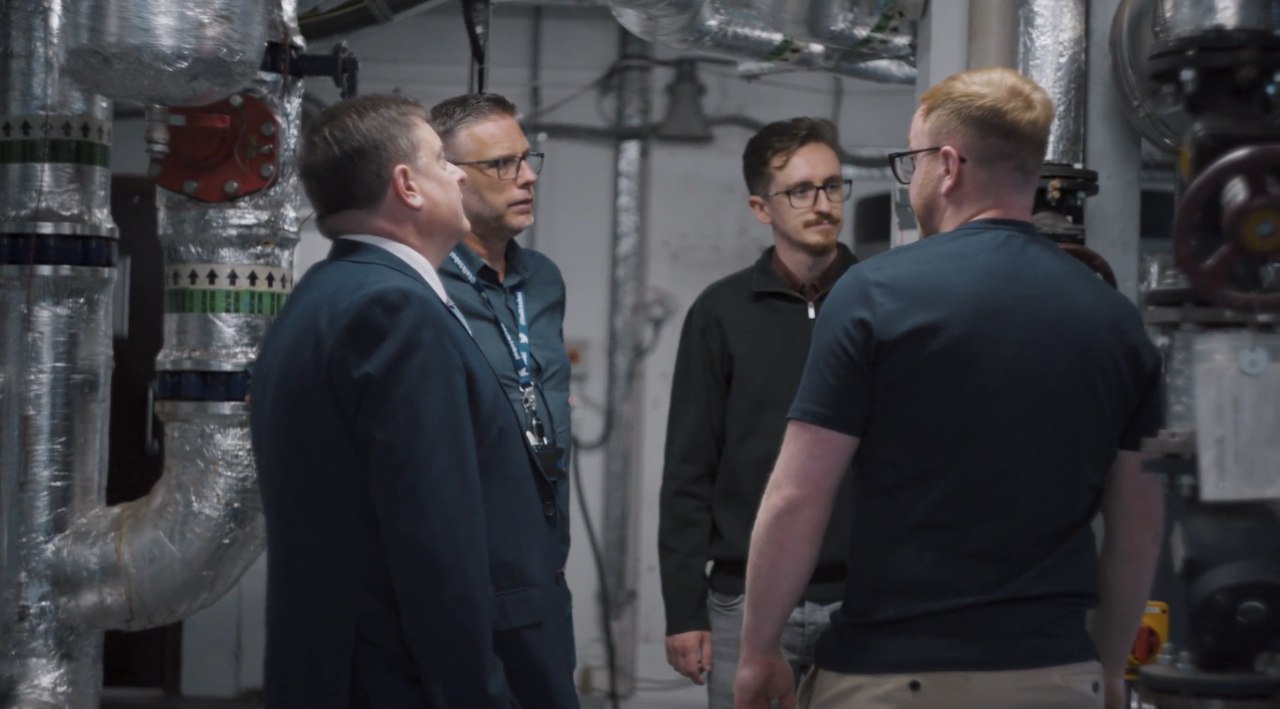
This project exemplifies how strong partnerships drive success. “When you have Mitsubishi Electric and an installer like Crossflow, it just goes seamlessly,” said Aaron. The collaboration between Bank of Ireland, Crossflow, JV Tierney and Mitsubishi Electric delivered a high-profile retrofit that meets carbon reduction targets, ensured operational continuity and future-proofs the building against regulatory changes. 


For Bank of Ireland, this is not just a technical upgrade, it’s a milestone in their journey toward sustainability. 


Bank of Ireland Team 3

When you have Mitsubishi Electric and an installer like Crossflow, it just goes seamlessly

Aaron O’Mahony
Project Engineer ,
JV Tierney & Co Consulting Engineers

The four units that we looked at for this project, we would have had a weighting criteria around energy performance, carbon impact, reliability and cost as well and the Mitsubishi Electric unit came out on top

Robbie Norman
Property Engineering Manager,
Bank of Ireland

It's going to remove about 120 tonnes of carbon from our overall target out to 2030. We're hoping then to replicate this installation across our other admin buildings

Robbie Norman
Property Engineering Manager,
Bank of Ireland

Mitsubishi Electric were the perfect option for this project with their reliability and their tech support

Johnny Ryan
Technical Sales,
Crossflow Refrigeration

This project was really exciting for us, as it was a full decarbonisation of the bank’s heating system

Andrew McEvitt
Applied Solutions Manager,
Mitsubishi Electric Ireland

Check Out Our Other Case Studies

DCU Exterior Building Close Up Shot

High Efficiency Meets Higher Education

Mitsubishi Electric helps DCU reach its Net Zero targets with HVRF.

17

Modern Comfort Meets Historic Heritage

Transforming the Landmark Printworks Building in Belfast

Dundalk Golf Club Golf 1

A Hole in One for Sustainability

Dundalk Golf Club’s Energy-Efficient Transformation